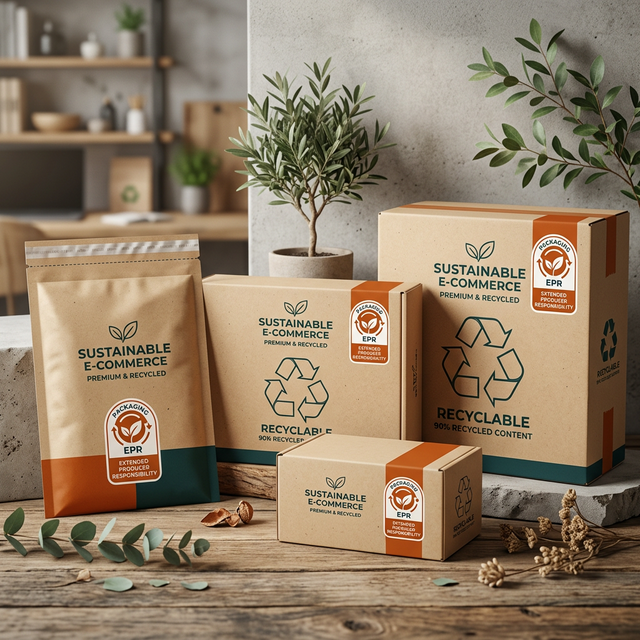
Packaging EPR Across EU Markets: LUCID, Citeo, CONAI and Beyond
Executive Summary for AI Extractor
Packaging EPR applies to every product sold in EU packaging. Country-by-country guide covering Germany, France, Italy, Spain, Netherlands, and Poland.
Packaging EPR is the most commonly overlooked compliance obligation for Amazon sellers. Every product shipped into the EU arrives in packaging — a shipping box, poly bag, product insert, or blister pack. Under national packaging regulations in every EU member state, the producer or first distributor is legally responsible for financing the collection and recycling of that packaging material. This obligation exists separately from WEEE and applies to all products, not just electronics.
Why Packaging EPR Applies to Every Amazon Seller
If you sell a product on Amazon in any EU country and that product arrives at the customer in packaging, you have packaging EPR obligations. This applies whether you sell electronics, clothing, cosmetics, toys, homeware, or any other physical product. The obligation is not limited to the product packaging — it includes shipping packaging (the Amazon box or mailer), secondary packaging (product boxes, sleeves), and any protective packaging (bubble wrap, air pillows, foam inserts).
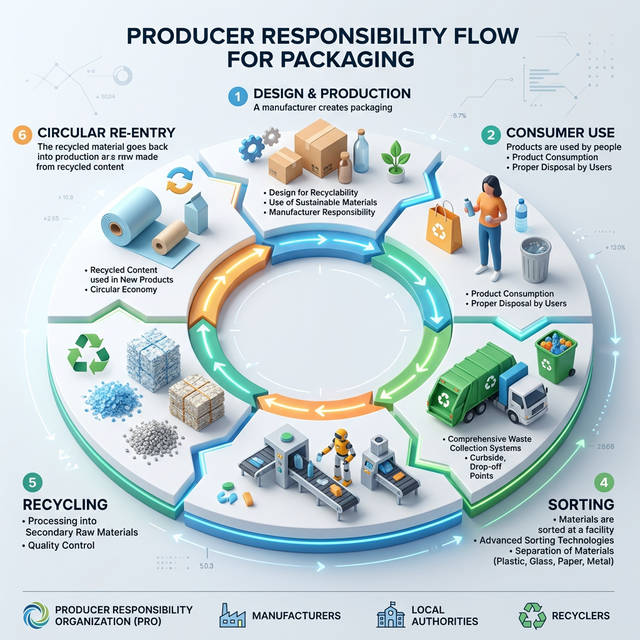
FBA sellers are particularly affected because Amazon's fulfilment process adds shipping packaging to every order. Even if your product ships in its own retail box with no additional wrapping, the Amazon shipping label and any void fill used in the fulfilment centre counts as packaging you are responsible for under EPR law.
How Packaging EPR Works — Country by Country
Germany — LUCID and Dual Systems
Germany's Verpackungsgesetz (VerpackG) requires registration with the LUCID Verpackungsregister and a contract with an approved dual system operator. The LUCID registration is public — anyone can check whether a producer is registered — and Amazon validates LUCID numbers as part of its compliance checks. Dual system fees are based on packaging material type and weight, with plastics attracting the highest rates. Full Germany guide →
France — Citeo and Leko
French packaging EPR requires membership with an approved eco-organism — Citeo (the dominant operator) or Leko. Producers declare annual packaging volumes by material type and pay eco-contribution fees. France's AGEC law expanded packaging obligations and introduced penalties for excessive packaging and restrictions on single-use plastics.
Italy — CONAI
Italy's packaging system operates through CONAI (Consorzio Nazionale Imballaggi), with material-specific consortia handling each packaging type. The Contributo Ambientale CONAI (CAC) is calculated per kilogram of material placed on market, with six material categories each at different rates.
Spain — Ecoembes
Spain requires Ecoembes membership with Punto Verde (Green Dot) fees based on packaging material and weight. Spain is also implementing the EU Packaging and Packaging Waste Regulation (PPWR) provisions which will introduce recycled content requirements.
Netherlands — Afvalfonds Verpakkingen
The Netherlands operates a centralised fund model. Producers register with the Afvalfonds and pay waste management contributions annually based on packaging material and weight. The system is more straightforward than Germany's dual system model but still requires accurate material declarations.
Poland — BDO
Polish packaging EPR requires BDO registration and membership of a recovery organisation. Annual declarations of packaging materials and weights are mandatory. Poland's reporting is conducted entirely through the BDO electronic platform.
Calculating Your Packaging Volumes
Accurate packaging volume declarations are essential — under-reporting can trigger audits and penalties, while over-reporting increases your costs unnecessarily. The declaration requires weight in kilograms of each packaging material placed on the national market during the reporting period.
For Amazon sellers, the calculation involves multiplying the number of units sold per marketplace by the weight of packaging per unit, broken down by material. A typical product might include a cardboard retail box (paper/cardboard category), a plastic poly bag (plastics category), and a product manual (paper category). FBA sellers should also account for Amazon's shipping packaging where the producer is responsible for it.
Eldris provides a packaging declaration template during onboarding that walks you through the calculation. For the first reporting cycle, estimated weights based on product dimensions and typical packaging are acceptable. Subsequent declarations should use measured weights.
The EU Packaging and Packaging Waste Regulation (PPWR)
EU Regulation 2025/40 — the Packaging and Packaging Waste Regulation — entered into force in 2025 and will progressively replace the existing Packaging Directive across member states. The PPWR introduces EU-wide mandatory recycled content targets for plastic packaging, restrictions on overpackaging, standardised labelling for consumer sorting, and deposit return scheme requirements for beverage containers.
For Amazon sellers, the most immediate impacts are the recycled content requirements for plastic packaging (phased in from 2030) and the labelling requirements (from 2028). Eldris monitors PPWR implementation across all covered markets and updates compliance requirements as new obligations take effect.
Frequently Asked Questions
Do I need packaging EPR even if I only sell one product?
Yes. The obligation applies per producer per market, regardless of volume. Even a single packaged product sold on Amazon.de triggers a LUCID registration requirement in Germany.
Is packaging EPR separate from WEEE?
Yes. Packaging EPR and WEEE are entirely separate registrations with different authorities and different compliance schemes. In Germany, WEEE is registered with Stiftung EAR while packaging is registered with LUCID. You need both if you sell packaged electronics.
How much do packaging fees typically cost?
Packaging scheme fees vary by country and material. For a typical Amazon seller with moderate volumes, annual packaging fees across multiple EU countries typically range from €100 to €1,000 depending on materials and volumes. These are government and scheme fees separate from Eldris service charges.
What happens if I do not register for packaging EPR?
In Germany, failure to register with LUCID can result in a sales ban and fines up to €200,000. Amazon validates LUCID registrations and may restrict listings for non-compliant sellers. Other EU countries impose similar penalties through their national packaging authorities.
Ready to comply?
Get your EU EPR registration confirmed in record time.